What Is a Black Eye? Recovery, Warning Signs and Medical Care
A dark patch around the eye after an accidental bump can look alarming, especially when swelling develops quickly. Commonly called a black eye, this injury occurs when small blood vessels beneath the skin break and leak blood into surrounding tissues. Even though most of the cases heal without complications, there are cases where the eye itself or the bones around it are involved. Knowing when to seek help from an eye doctor near me can make an important difference in protecting your vision.
A black eye is a common occurrence following a fall, sports injury or accidental impact. The affected region can swell, tenderness and discolour within a few days. The majority of simple bruises can be treated with simple care, although such symptoms as vision changes, intense pain, or increasing swelling must never be overlooked.
What Is a Black Eye?
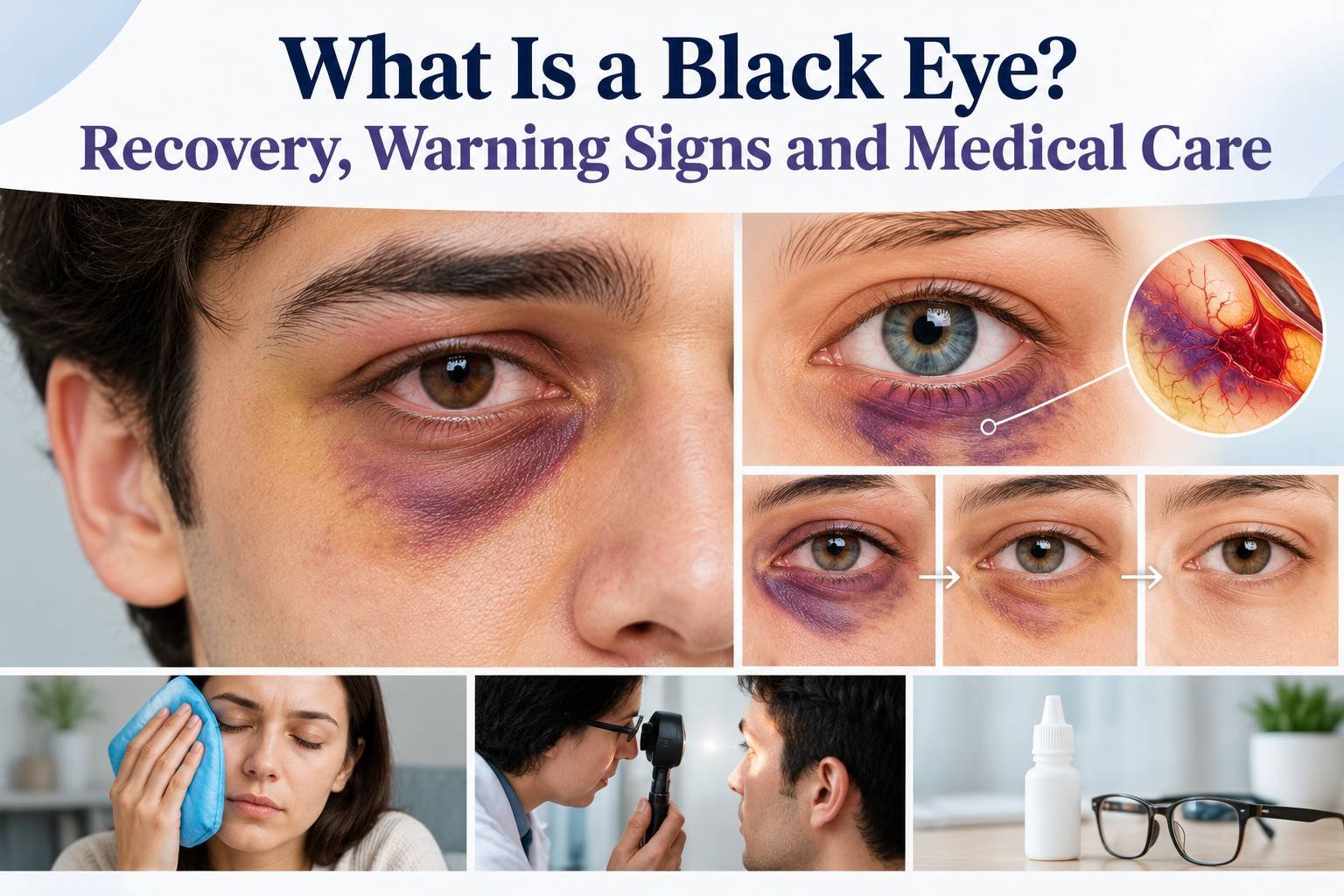
A black eye is a bruise on the eyelids and tissues around the eyes. The initial impact damages tiny blood vessels beneath the skin, allowing blood to collect in the affected area. The resultant bruise can be red or purple initially and then slowly turns blue, green or yellow.
Although it may seem so, a black eye does not necessarily imply that the eyeball is damaged. Nevertheless, the force powerful enough to produce external bruising may damage the eye socket, retina, or other internal organs. Medical examination is especially necessary following a major trauma or when the symptoms go beyond normal bruising.
Common Causes of a Black Eye
A black eye may occur following various forms of injuries or effects. Common causes include:
Accidental Falls: Falling onto furniture, floors, or other hard surfaces may cause damage to the fragile tissues that surround the eyes.
Sports Injuries: Accidental collisions or direct impacts may result in bruising in sports like boxing, football, and basketball.
Blows to the Face: A blow or accidental blow to the face may injure small blood vessels around the eye resulting in swelling and discolouration.
Road Accidents: Bruising around one or both eyes may occur as a result of sudden impacts during vehicle collisions.
Everyday Bumps: A black eye can be caused by accidentally bumping into a door, cupboard, or other hard object.
How Long Does Recovery Usually Take?
Most uncomplicated black eyes begin improving within a few days and heal substantially within two to three weeks. The swelling can be most prominent in the first two days, and the bruise colour changes as the body slowly breaks down and absorbs the trapped blood.
The time taken to recover is determined by the extent of the injury, your overall health and the presence of other structures. Do not rub or press the injured part, even when swelling starts to subside. In case the pain, discolouration, or swelling do not improve but get worse, schedule a medical appointment.
Warning Signs That Need Medical Attention
Some of the symptoms can be signs of a more severe injury than a superficial bruise. Blurred or doubled vision, blood in the eye, intense eye pain, difficulty moving the eye, unequal pupils, or abnormal sensitivity to light are emergent cases.
Emergency treatment is needed in case of loss of consciousness, recurrent vomiting, confusion, severe or progressive headache, or clear fluid or blood in the nose or ears following head trauma. If you are searching for an eye doctor near me, do not delay emergency care to arrange a routine appointment when these warning signs are present.
Safe Ways to Manage a Black Eye
The initial 24-48 hours should be spent with a cold compress applied in 10-20 minute intervals. Place wrap ice or cold packs in a clean cloth instead of touching the skin. Do not press the eyeball and have breaks between applications to avoid damaging the skin.
A comfortably warm compress can be used after about 48 hours when the swelling starts to subside. Sleeping with your head raised a little will also help to decrease the amount of fluid around the eye. Avoid contact sports until the injury has healed and a healthcare professional has cleared you if the impact was significant.
When Should You See an Eye Specialist?
An eye test can be suitable even in the absence of dramatic symptoms, particularly following a severe impact, particularly when you wear contact lenses or have a pre-existing eye condition. To identify the necessity of additional testing, a specialist can examine vision, eye movement, pupil reactions, and internal organs.
When the bruising fails to heal, recurs repeatedly without obvious injury, or both eyes following head trauma, consult a professional. An eye doctor near me can help assess possible eye damage and advise you on safe recovery.
Final Words
A black eye may heal on its own, however, the bruise may conceal a more severe injury. Rest, careful observation, and gentle cold compresses may assist in recovery in the case of an uncomplicated injury.
Be aware of warning signs and not judge severity based on colour alone. Prompt medical assessment, including advice from an eye doctor near me when appropriate, can help identify complications and protect your vision.
Ready for clearer vision? Book your appointment today with our expert eye care team!