How Thyroid Disorders Can Affect Eye Appearance and Movement
Changes in your eyes can sometimes reveal more than an eye-related problem. If your eyes appear unusually prominent, your eyelids look retracted, or moving your eyes becomes uncomfortable, your thyroid may be involved. The tissues and muscles around the eyes can be impacted by thyroid disorders and may lead to apparent changes in appearance, vision, and daily comfort. Consulting an eye doctor near me can help identify these symptoms and determine whether further evaluation is necessary.
Thyroid eye disease (TED), or thyroid-associated ophthalmopathy, is one of the conditions related to these changes. It is usually accompanied by Graves disease, an autoimmune disorder that may lead to hyperthyroidism. However, thyroid eye disease can also develop in people with normal or underactive thyroid hormone levels.
What Is Thyroid Eye Disease?
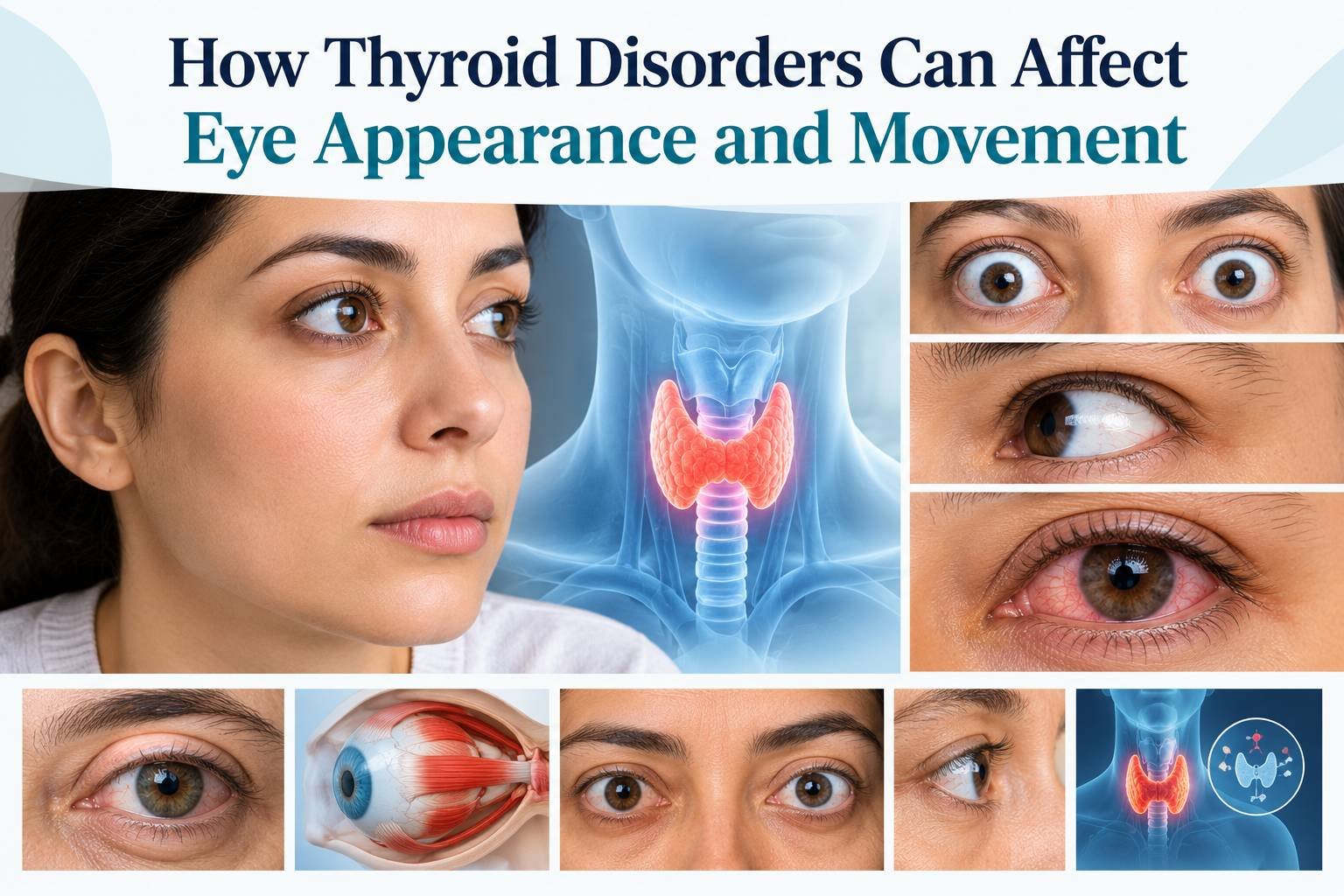
Thyroid eye disease is a condition that arises when the immune system attacks the tissues surrounding the eyes. The eye muscles, connective tissues, and fat in the eye socket can be inflamed. These alterations can lead to swelling and make the eyes look bigger than normal.
Even though TED often goes hand in hand with Graves disease, eye symptoms do not necessarily occur simultaneously with thyroid issues. There are individuals who observe alterations in their eyes prior to being diagnosed with thyroid. If you experience unexplained changes in eye appearance, an eye doctor near me can assess your symptoms and recommend appropriate investigations.
Why Do the Eyes Seem to be More Prominent?
Proptosis, or the eyeball sticking out further than normal, is one of the most identifiable symptoms of thyroid eye disease. Swelling and inflammation make tissues in the eye socket to be larger, and there is less room in the eye socket.
Large eyes may alter the facial features and cause the eyelids not to close fully. Dryness, watering, redness, or a gritty feeling are also experienced by some people since the exposed eye surface is easily lost in moisture. The chronic symptoms should be medically addressed especially when the eyes start to protrude.
Changes in Eyelids and Facial Appearance
Thyroid diseases may influence the position of the eyelids around the eyes. The eyelids can be pulled up, revealing more of the white part above the iris. This may give a wide-eyed look, even in cases where the individual is neither shocked nor scared.
Puffiness can also be caused by swelling around the eyelids, and the tissues around the eyes can appear red or painful due to inflammation. These alterations may be more apparent in one eye than the other. An eye doctor near me can help distinguish thyroid-related changes from allergies, infections, and other causes of eyelid swelling.
How Thyroid Problems Affect Eye Movement
Thyroid eye disease can cause the muscles that move the eyes to become inflamed and enlarged. These muscles can become stiff and therefore they are not able to move freely and it is hard to look in some directions. Individuals may find it uncomfortable to look up, down, or laterally.
Muscle involvement can also lead to double vision, particularly when looking in specific directions. The vision can be distorted by the double vision, which can disrupt reading, walking, driving, and other daily activities. If it develops suddenly or becomes severe, seek prompt medical assessment rather than attempting to manage it independently.
Diagnosis and Available Treatment Options
Physicians examine thyroid eye disease by examining the eye, medical history, and eyelid position, eye movement, and vision. Blood tests may be used to detect abnormalities in thyroid hormones and the presence of antibodies. Imaging, such as a CT scan or MRI, may be recommended when the diagnosis is uncertain or complications are suspected.
Therapy is based on activity and severity of the disease. Mild symptoms can be managed by lubricating eye drops, smoking cessation, and precautions to protect the eye surface. Selected patients may benefit from corticosteroids, targeted medicines, radiation therapy, or surgery. The levels of thyroid hormones should also be properly managed, but treatment of the thyroid alone might not be sufficient to eliminate all the eye symptoms.
When Do You Need Professional Help?
Professional evaluation should be conducted in case of new eye prominence, continued swelling, limited eye movement, or double vision. Early diagnosis can assist in detecting thyroid eye disease and deciding whether an ophthalmologist, endocrinologist or both should take care of you.
If you are searching for an eye doctor near me, choose a qualified professional who can examine your eyes and arrange further testing when needed. Emergency treatment is required in case of sudden loss of vision, colour perception, intense eye pain, or symptoms that get worse very quickly.
Final Words
Thyroid diseases may affect the appearance of the eyes, the position of the eyelids and muscles that move the eyes. Early identification of these changes can help to obtain a proper diagnosis and treatment. Monitor chronic symptoms, follow-up visits as advised, and maintain your thyroid condition under medical care.
Ready for clearer vision? Book your appointment today with our expert eye care team!