Dry Eyes or Eye Allergy? How to Tell the Difference
Watery, red, and irritated eyes are frustrating, particularly when the cause is not clear. Dry eyes and eye allergies have a number of similar symptoms, yet they occur due to different causes and may need different treatment. Being aware of the differences will enable you to act accordingly rather than addressing the wrong issue.
People often search for an eye doctor near me when discomfort continues despite basic home care. It can be easier to realize that professional assessment might be required when one is aware of typical symptoms, triggers, and warning signs.
What Causes Dry Eyes?
Dry eye is a condition that arises when the eyes fail to produce sufficient tears or when the tears are lost too fast. Poor moisture on the surface of the eye can be caused by screen use, aging, some medications, environmental factors, and decreased blinking.
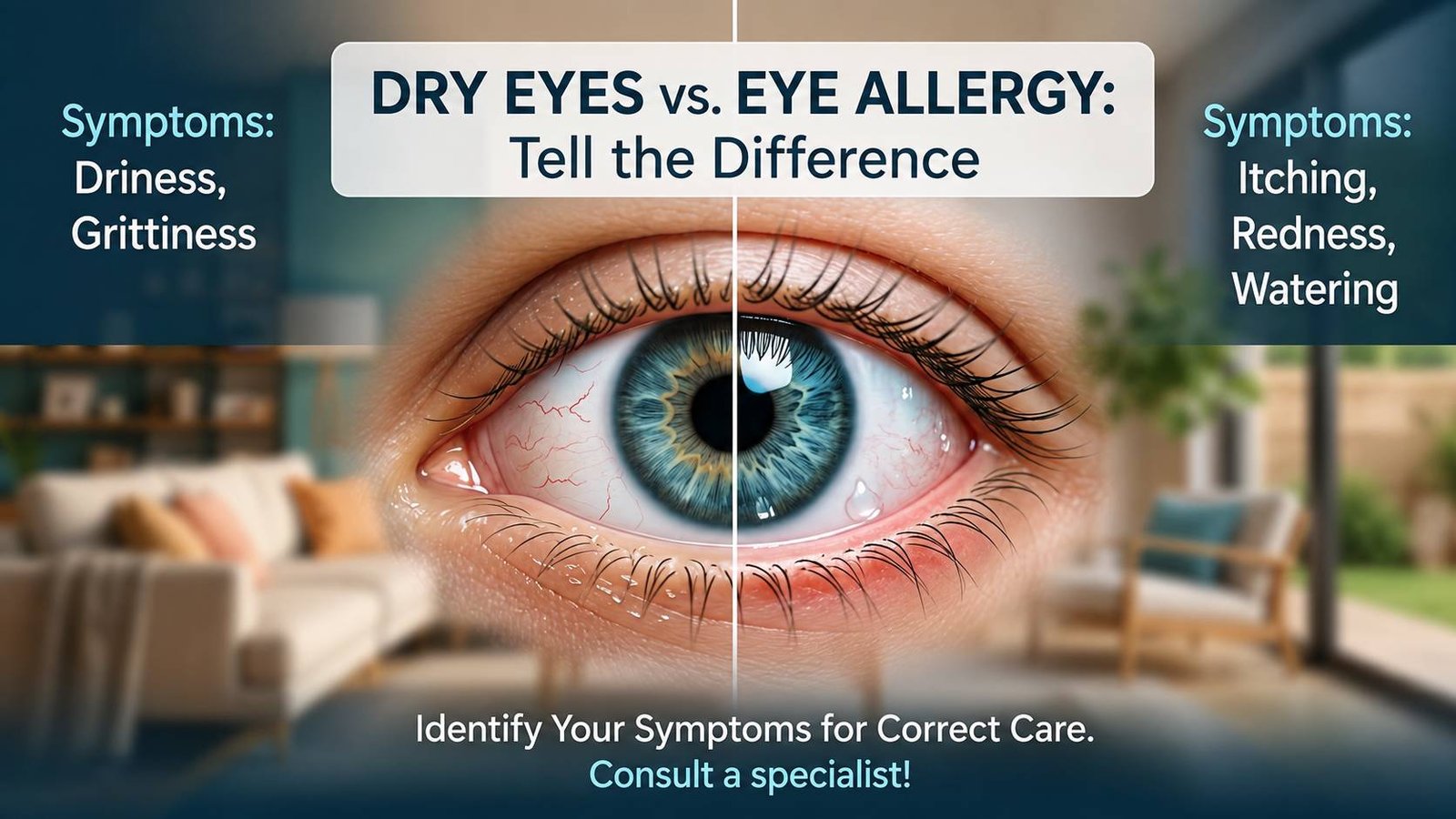
Individuals who have dry eyes often complain of burning, grittiness, irritation, redness, or feeling that something is lodged in the eye. Interestingly, overwatering is also possible since the eyes can also produce reflex tears as a result of irritation.
What Causes Eye Allergies?
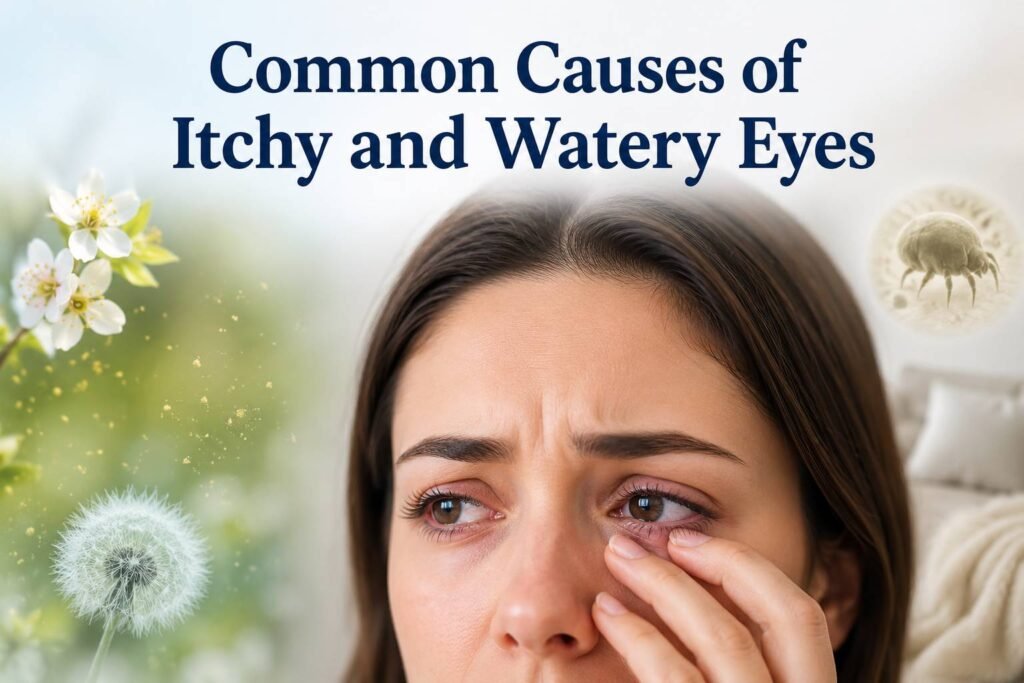
Eye allergies occur when the immune system responds to pollen, dust mites, pet dander or mold. These allergens may lead to inflammation in the areas of the eyes and can be accompanied by other symptoms of allergy.
One of the most powerful indicators that allergies could be at play is itching. It can also be watery eyes, reddish, swollen eyelids, and light sensitivity. Symptoms related to allergy can be more evident in certain seasons or when exposed to certain triggers.
The Biggest Difference Is Often Itching
Both conditions can cause redness and watering, which makes them difficult to distinguish at first. Nevertheless, severe itching is typically more closely related to eye allergies than to dry eye.
Dry eyes are likely to cause burning, grittiness, blurred vision, or pain following long-term visual activities. Paying attention to how your eyes feel, rather than focusing only on redness, can provide useful clues about the possible cause.
Look at When Symptoms Appear
The underlying problem can also be determined by timing. Symptoms of dry eyes can be aggravated by prolonged computer use, reading, driving, or being in an air-conditioned setting.
Meanwhile, the symptoms of allergy usually manifest themselves after being exposed to a specific trigger. An allergic response can be more probable in case the symptoms always occur outside during the season of high pollen or after interacting with pets.
How Treatment Approaches Differ
Treatment of dry eyes is often aimed at enhancing moisture and minimizing the irritants to the eye surface. Screen breaks, blinking, keeping hydrated, and lubricating eye drops when necessary can help.
The general approach to allergy management is to reduce exposure to trigger and regulate the inflammatory response. Recurring symptoms can be reduced by avoiding known allergens, maintaining living spaces clean, and using suitable allergy treatments.
When Professional Evaluation Helps
In case of persistence of symptoms even with lifestyle modifications, an eye doctor near me can assist in establishing whether the cause is dry eye, allergies or otherwise. An eye test can examine the surface of the eyes and detect any signs that might not be apparent at home.
Professional assessment is particularly significant in case of persistent, severe, or daily activity symptoms. It is also able to avoid the repetition of treatments that are not suitable to the real cause.
Don't Confuse Irritation With Infection
Dryness and allergies do not necessarily cause red eyes. Some infections may also cause redness, watering, discharge, swelling, and discomfort, which will need another method.
Thick discharge, great pain, extreme sensitivity to light, or rapidly progressive symptoms cannot be considered as normal irritation. Early professional examination may assist in identifying whether an infection or some other eye disorder requires treatment.
Simple Habits Can Protect Eye Comfort
Despite the cause, there are a number of habits that can help in enhancing eye comfort. It can be helpful to limit the exposure to smoke, take frequent screen breaks, and avoid unnecessary rubbing of the eyes, as well as to protect the eyes against environmental irritants.
It can also be helpful to keep track of recurring symptoms. Noting when discomfort begins, what triggers it, and how long it lasts can provide valuable information during a professional eye examination.
Conclusion
Understanding whether it is dry eyes or an eye allergy can assist you in selecting more suitable care. Although itching and recognizable environmental allergens tend to indicate allergies, burning, grittiness, and discomfort related to screens are more likely to be linked with dry eyes.
If symptoms persist or their cause remains uncertain, consulting an eye doctor near me can provide a clearer diagnosis and appropriate guidance. Paying attention to recurring symptoms instead of simply treating redness can help protect eye comfort and long-term vision.
Ready for clearer vision? Book your appointment today with our expert eye care team!